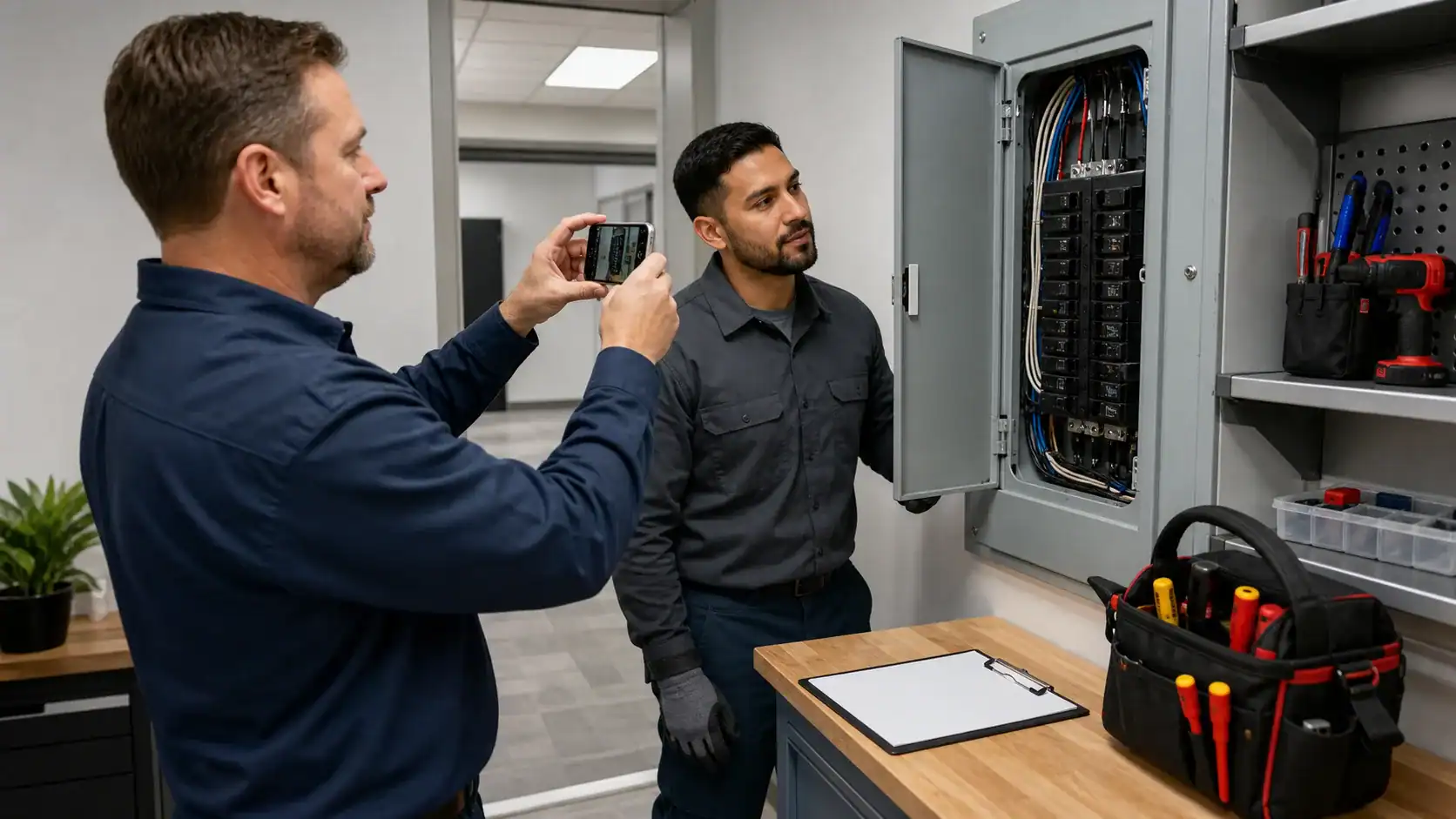
Keep Operations Moving with Better Issue Notes
Clear notes help you explain an electrical concern without guessing at what caused it. For commercial property managers, facility teams, and business owners, that can help protect employee safety, customer comfort, equipment, and normal operating hours. When we receive a well-organized record, we can begin understanding the situation before arriving at your property.
At Rahman Electric, we work with commercial electrical systems and permanent exterior lighting for offices, retail spaces, restaurants, warehouses, medical facilities, and other business properties. Good documentation does not replace licensed electrical work, but it gives us helpful information for electrical service calls in Plainview, MN and throughout the Rochester area.
Your team should only record what can be safely observed. Employees should not open electrical panels, remove covers, repeatedly reset tripping breakers, or attempt repairs. If there is smoke, sparking, a burning odor, or another immediate safety threat, follow your company’s emergency procedures first.
Capture Safety Details Before Problems Escalate
Start the record as soon as it is safe to do so. The date, time, and exact location can help show whether the concern is limited to one area or affects a larger part of the building. A note such as “back office” may not be enough if your property has several offices, storage rooms, or electrical panels.
Helpful location details may include:
- The room, exterior area, or building entrance
- The panel designation and visible circuit label
- The fixture location, pole number, or building side
- The equipment, outlet, or lighting area affected
Next, write down what people can actually see, hear, or smell. There is no need to diagnose the issue. Notes such as “lights flickered twice near the front counter” or “the copier lost power during the afternoon shift” are more useful than trying to name a failed part.
Observable warning signs can include flickering lights, outlets losing power, breakers tripping, buzzing sounds, warm electrical equipment, burning smells, or equipment shutting down unexpectedly. Photos may also help when they are taken from a safe distance. Never open an electrical enclosure or move close to damaged equipment just to get a photo.
Business impact belongs in the record, too. Let us know whether the problem affects safety lighting, work areas, customer-facing spaces, refrigeration, computers, machinery, security equipment, or building access. That context helps us understand how the concern is affecting daily operations and where attention may be needed first.
Build a Service-Ready Record
One consistent reporting form can prevent important details from getting lost as an issue moves from an employee to a manager, then to a maintenance contact. A simple internal log is often enough, as long as everyone knows where to find it and how to use it.
We recommend including these basics in every report:
- Name of the person reporting the issue and a callback number
- Property address and affected area
- Date and time the issue began
- Whether the issue is constant or comes and goes
- A short description of what was safely observed
Recent changes around the property can also give useful context. For example, make a note if new equipment was installed, tenant improvements were completed, renovations took place, construction occurred nearby, a utility interruption happened, or operating hours changed. These details do not identify the cause, but they can help us prepare for a commercial electrical visit.
Keep related records together when they are available. Previous invoices, inspection notes, panel schedules, equipment manuals, and photos of the affected area may all be useful. It also helps to note secure areas, customer traffic, production zones, required check-in steps, and any site-specific safety procedures. Sharing current, relevant information gives us a clearer starting point while keeping the visit organized.
Document Permanent Lighting Problems Before Winter
October is a practical time to inspect permanent exterior lighting before winter weather and earlier sunsets make dark areas more noticeable. A walk around the property after dark can reveal problems that are easy to miss during daytime hours.
As you inspect the exterior, record lights that are not operating, flickering, dimmer than nearby fixtures, or turning on and off at unexpected times. Identify each fixture as precisely as possible so we do not have to rely on general directions such as “the light by the parking lot.”
Useful identifiers include parking lot rows, building sides, entrance names, pole numbers, loading areas, walkways, sign locations, and security camera zones. Photos taken from a safe location can show which fixtures are affected and whether darker conditions are developing along customer or employee paths.
Conditions around the fixture matter as well. Your notes can mention recent storms, visible moisture, damaged poles or fixtures, landscaping that blocks light, inconsistent timer operation, or photocells that seem to activate at the wrong time. Employees should not climb ladders, access elevated fixtures, or attempt wiring repairs. The goal is simply to provide safe, accurate observations for a licensed contractor.
Share Details for a More Organized Response
When you request commercial service, send the issue record along with photos when they are safely available. Include the best on-site contact, building access details, and a short explanation of the operational impact. For electrical service calls in Plainview, MN, that preparation helps us understand the scope of the concern before we arrive.
Site conditions can affect both access and scheduling. Let us know about loading dock procedures, customer hours, employee shifts, secure rooms, equipment shutdown windows, or spaces that must remain open. A clear access plan helps reduce confusion for your team and ours.
Keep the record updated if conditions change. If another fixture stops working, a breaker trips again, equipment loses power, or your team puts a temporary business workaround in place, add that information and share it. The most current notes give us the best picture of what your property is experiencing.
Make Documentation a Regular Facility Habit
A short, consistent electrical issue record can support safer decisions and clearer communication. It helps your team describe what happened, where it happened, and how it affects the property, without putting anyone in the position of attempting electrical work.
Before winter weather, darker afternoons, and busy seasonal operations add pressure, take time to review exterior lighting and existing maintenance reporting practices. Good notes cannot solve an electrical problem on their own, but they can help prevent a small concern from becoming a larger disruption.
Keep Your Business Operating Safely
When an issue needs professional attention, our team is ready to provide dependable electrical service calls in Plainview, MN for commercial properties. Rahman Electric can assess the problem, address needed repairs, and help support the safe operation of your lighting and electrical systems. To discuss a service need, contact us today.