
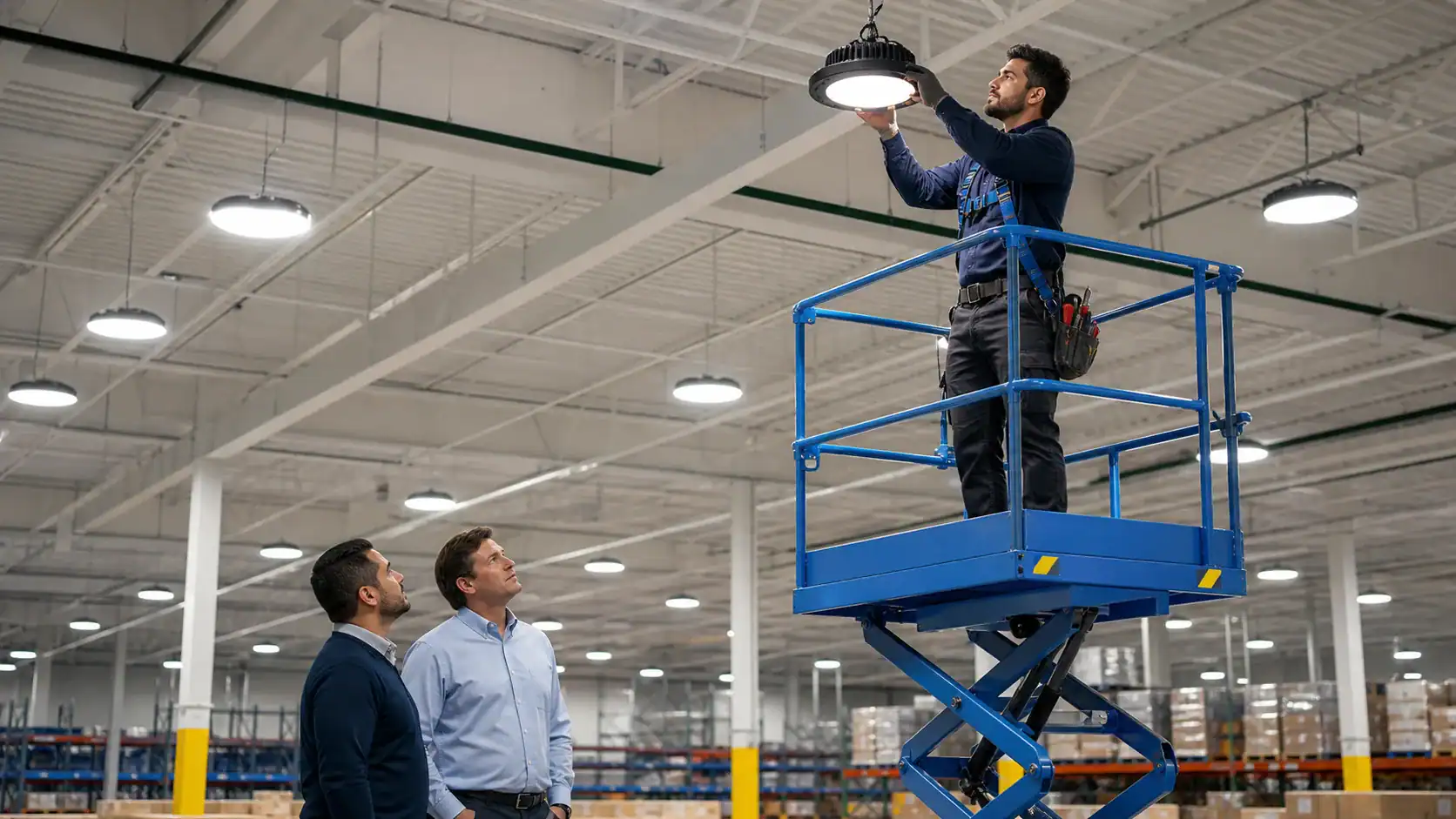
An LED upgrade in Rochester, MN is more than swapping old bulbs for new ones. When we plan commercial lighting carefully, it can help lower energy use, improve comfort for employees and customers, and give your property a cleaner, more polished appearance. As fall brings earlier sunsets and winter weather moves closer, now is a practical time to look at indoor lighting, entrances, parking areas, and exterior visibility.
Every property has different hours, work areas, safety concerns, and maintenance needs. We believe a good lighting plan should reflect how your facility actually operates instead of relying on a one-size-fits-all fixture replacement.
Start with a Facility Lighting Assessment
A successful project begins with an on-site review of your current lighting and electrical setup. We look at existing fixtures, lighting levels, controls, and the condition of the electrical infrastructure that supports them. Older fluorescent fixtures, metal halide lights, high-bay fixtures, canopy lights, and exterior lighting may all need a different approach.
How people use each space matters just as much as the fixture itself. An office often benefits from comfortable, glare-controlled lighting. A warehouse, service bay, retail floor, loading area, or parking lot may need more focused illumination for visibility and safe movement.
During an assessment, we consider details such as:
- Where employees, customers, and deliveries move through the property
- Areas with shadows, glare, uneven light, or hard-to-reach fixtures
- Fixture placement, mounting height, and light distribution
- Existing switches, sensors, timers, photocells, and other controls
- Electrical capacity and any improvements needed to support the project
Simply replacing an old fixture with an LED version of the same style is not always the best answer. We may recommend a different lumen output, beam angle, color temperature, or fixture location based on the area’s purpose. This helps you get usable light where it belongs without making the property feel overly bright.
Because we work with commercial properties within about 30 miles of Rochester, we understand the lighting needs that come with Southeastern Minnesota facilities and changing weather conditions.
Consider the Full Value of an LED Upgrade
Upfront investment is often the first concern, but we encourage you to look at the full life of the lighting system. LED fixtures generally use less energy than many older commercial lighting systems, and they can reduce the need for frequent lamp and ballast replacements. That can be especially helpful when fixtures are mounted high above a work floor or installed in difficult exterior locations.
The scope of your project can vary based on several practical factors. Fixture quantity, mounting height, access needs, controls, electrical improvements, and outdoor lighting all shape the overall plan. A clear proposal should separate the equipment, labor, controls, and recommended electrical work so you can understand what is included.
Utility incentives or rebates may also be available for certain qualifying equipment. These programs can change, so we recommend confirming eligibility before fixtures are purchased or work begins. Planning early gives you more time to review available options and make decisions without rushing.
Maintenance deserves attention, too. Replacing a burned-out high-bay fixture or parking lot light may require special access equipment and coordinated work around daily operations. Longer-lasting LED equipment can reduce those interruptions and make ongoing property maintenance easier to manage.
Plan Installation Around Your Workday
Commercial lighting work should fit your business, not force your business to fit the work. Offices, restaurants, medical facilities, warehouses, retail stores, and service businesses all have different needs when it comes to timing, access, and safety. We work with you to create an installation sequence that limits disruption as much as possible.
Before installation starts, a clear plan should identify which fixtures will be replaced first, whether any electrical shutdowns are needed, and which areas must stay illuminated. This is particularly important for properties with active work zones, customer traffic, deliveries, or after-hours operations.
A thoughtful installation plan may include:
- Work completed in phases or during lower-traffic periods
- Temporary lighting where safe paths of travel must remain visible
- Coordinated access for lifts or other equipment
- Safety procedures for employees, customers, and crews
- Testing and final adjustments after the fixtures are installed
Once the new lighting is in place, we check that it performs as intended. Controls, occupancy sensors, timers, photocells, fixture aiming, and lighting levels all need to be reviewed. Those final adjustments matter even more as fall and winter bring darker mornings, earlier evenings, and greater demand for dependable exterior lighting.
Improve Safety and Exterior Appeal
Good commercial lighting supports a property that feels easier to use after dark. Clear illumination at entrances, sidewalks, stairways, loading areas, parking lots, and building perimeters can help employees and visitors move through the site with more confidence. It also helps your team spot obstacles, changes in walking surfaces, and active work areas.
Permanent exterior lighting can be part of a broader lighting strategy, not just a decorative add-on. Professionally installed lighting can highlight architectural features, support after-hours curb appeal, and provide flexible illumination for seasonal displays, special events, or business branding. Unlike temporary setups, permanent systems are designed to become a dependable part of the property.
Appearance should never come at the expense of function. We plan exterior lighting with attention to fixture placement, brightness, aiming, and controls. The goal is to reduce dark spots and glare while directing light toward the areas where it is most useful. Durable equipment and proper installation also matter when lights will be exposed to Minnesota weather.
Photocells, timers, and programmable controls can make exterior lighting more consistent as daylight hours shift. These options help lights operate when they are needed while limiting unnecessary run time.
Put Your Fall Lighting Plan Into Action
Early fall is a smart time to review lighting concerns before winter conditions make them more noticeable. A facility evaluation gives you time to compare fixture options, review electrical needs, coordinate installation around operations, and make sure key areas will be properly lit when daylight becomes limited.
The most useful plan is one built around your facility, your people, and the way your business operates each day. By addressing lighting before darker weather arrives, you can make informed decisions that support visibility, energy efficiency, safety, and dependable performance throughout the season.
Get Lighting That Supports Daily Operations
Rahman Electric can help you evaluate the electrical capacity and installation needs behind a LED upgrade in Rochester, MN. Our team focuses on commercial lighting solutions that fit your facility’s layout, operating hours, and long-term needs. Contact us to discuss your project and arrange an on-site assessment.