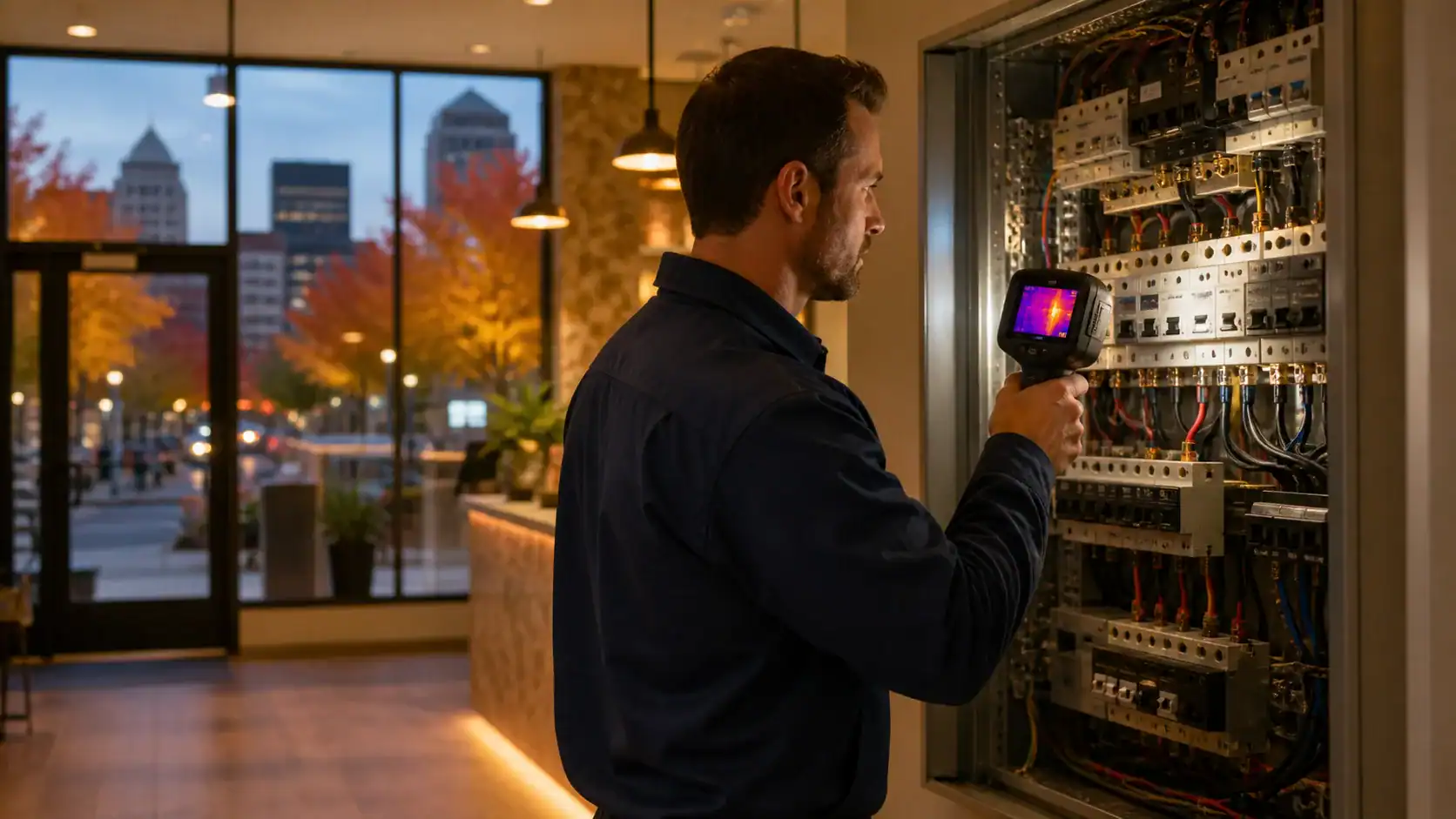
Earlier fall sunsets can raise a property’s lighting use long before winter arrives. When parking lots, entrances, signs, and loading areas turn on hours earlier each day, old fixtures and outdated controls can quietly add unnecessary runtime.
At Rahman Electric, we help commercial properties in Rochester and within about 30 miles across Southeastern Minnesota review permanent lighting and the electrical equipment behind it. A closer look before the darkest months can uncover waste while protecting the visibility, safety, and dependable operation your property needs after dark.
Fall Darkness Brings Hidden Lighting Waste to Light
During summer, exterior lighting may only run for a short part of the evening. By October and November, that same lighting can switch on in late afternoon and remain on until morning. Across a commercial property, those extra hours add up quickly.
We often find that brighter months hide problems that become obvious once darkness comes earlier. A fixture may be using more power than needed, a timer may still follow an old schedule, or a photocell may fail to respond correctly to changing daylight.
Permanent lighting zones worth reviewing include:
- Parking areas and employee walkways
- Main entrances and customer access points
- Loading zones, service doors, and delivery areas
- Security lighting around the building perimeter
- Illuminated signs and wall-mounted exterior fixtures
Not every area needs the same amount of light or the same operating schedule. Main entrances may need steady lighting through business hours, while a secondary service area may only need light during deliveries or when someone is present. Reviewing each zone separately helps us identify where energy is being used without a clear purpose.
Older Exterior Fixtures Can Use More Power Than Needed
Aging commercial lighting systems are a common source of after-dark energy waste. Metal halide fixtures, high-pressure sodium lights, oversized floodlights, older wall packs, and sign lighting can draw more electricity than newer LED equipment. They may also produce uneven light, dark spots, glare, or light that spills beyond the area it is meant to cover.
Replacing a bright but poorly placed fixture is not simply about making an area look newer. The goal is to place the right amount of light where people need it. A low-traffic walkway does not always need the same fixture output as a busy main entrance, and overlapping floodlights may create more glare than useful visibility.
With a commercial lighting retrofit in Rochester, MN, we assess how each fixture serves the space around it. That includes reviewing the fixture type, placement, direction, output, and hours of use. In many cases, lower-watt LED fixtures can provide consistent illumination without keeping an oversized system running all night.
Lighting issues we commonly evaluate include:
- Fixtures that leave bright pools of light beside dark walking areas
- Floodlights aimed beyond the property or into unused spaces
- Wall packs that run continuously despite low nighttime activity
- Older sign lighting that stays on long after business hours
- Multiple fixtures lighting the same small area
A lighting upgrade should support safe movement around the property, clear visibility at doors and walkways, and reliable nighttime operations. Saving energy should never mean leaving a parking area, entrance, or work zone poorly lit.
Controls Keep Permanent Lighting on the Right Schedule
Fixtures are only one part of the equation. Lighting controls often determine whether a system runs when it should, or keeps using electricity after activity has ended. A timer that was never adjusted for fall daylight changes can leave lights on too early or too late. Likewise, a failed photocell can cause a fixture to operate during daylight or remain on well past the needed hours.
Proper controls allow permanent commercial lighting to respond to actual conditions. Depending on the area and how it is used, we may review photocells, astronomical timers, occupancy sensors, motion sensors, and separate control zones.
For example, your building’s main entrance and employee walkway may need predictable evening lighting. A low-use side lot, rear service door, or loading zone may need a different schedule. Separating those areas prevents one control setting from operating every exterior fixture across the property.
A commercial lighting retrofit in Rochester, MN often includes updated controls along with LED fixture replacement. We make sure controls are connected and programmed to work with your existing electrical equipment. That planning also helps avoid conflicts with lighting that must remain available for safety, security, or emergency needs.
Reliable Lighting Starts with the Electrical System
Energy waste can sometimes point to a larger electrical concern. Older panels, worn connections, overloaded circuits, and poorly organized lighting circuits can make permanent lighting harder to manage. Even a well-planned LED upgrade needs sound electrical support behind it.
Before changing fixtures or expanding an exterior lighting area, we review the circuits, disconnects, connections, controls, and available panel capacity. LED fixtures usually reduce lighting demand, but each property’s existing equipment still needs to be in good condition and properly matched to the planned work.
A commercial lighting retrofit in Rochester, MN may also reveal practical electrical improvements that support dependable lighting, such as repaired circuits, dedicated lighting circuits, updated control connections, or panel work. Addressing those concerns early can help reduce maintenance headaches and lower the chance of unexpected outages during darker, colder weather.
Review Your Lighting Before Winter Adds More Runtime
Fall is a practical time to review which lights operate after closing, which areas seem overlit or underlit, and whether timers and photocells match current sunset conditions. Facility managers can also note fixtures that flicker, take a long time to start, produce uneven light, or require frequent lamp changes. Those signs can help guide a professional assessment of the lighting system and the equipment that powers it.
As nights grow longer, the best approach is to match each lighting zone to the real needs of the property. Well-planned fixtures, properly set controls, and dependable electrical equipment can help keep exterior areas visible and usable without wasting power on empty spaces or unnecessary all-night runtime.
Improve Visibility While Reducing Operating Costs
Rahman Electric can assess your exterior lighting layout, controls, and equipment to identify practical upgrades for your property. A commercial lighting retrofit in Rochester, MN can help align fixture performance with your building’s operating hours and safety needs. When you are ready to discuss your lighting goals, contact us for commercial electrical guidance.