
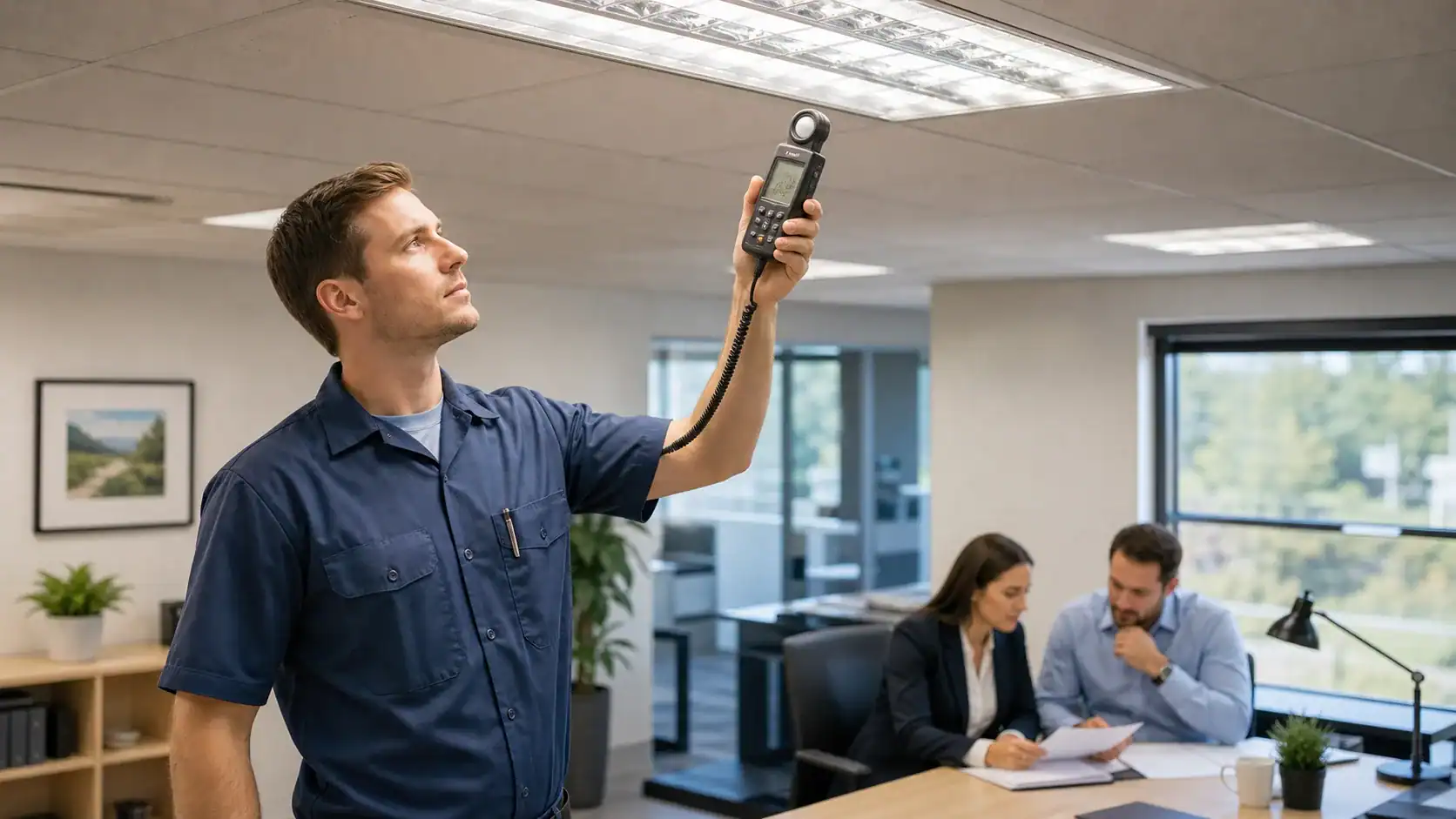
Keep Rochester Workplaces Bright Before Winter
Aging fluorescent lighting can become a bigger problem when late October brings shorter days and earlier sunsets around Rochester. When indoor light is dim, uneven, or unreliable, employees notice it quickly during morning arrivals and late-afternoon shifts. We recommend addressing recurring fixture trouble before winter weather and busy year-end schedules make repairs harder to coordinate.
Commercial facilities depend on steady lighting for much more than appearance. Clear, dependable illumination supports focused work, safer movement through aisles and corridors, confident customer interactions, and smoother daily operations. When several fluorescent fixtures begin acting up at once, the issue is no longer a small maintenance task. It may point to aging ballasts across part of the building.
For businesses within about 30 miles of Rochester, a fall lighting review gives us time to identify concerns before reduced daylight makes dark work areas more noticeable. A proactive plan can prevent repeated interruptions and help you decide whether continued fluorescent repairs still make sense.
Ballast Failures Turn Routine Tasks Into Downtime
Fluorescent ballasts control how fluorescent lamps start and operate. As they age, they may not fail all at once. Instead, they can cause a steady stream of small lighting problems that interrupt staff, frustrate maintenance teams, and make certain areas of a commercial space harder to use.
Common signs we see include:
- Lamps that flicker, flash, or take too long to turn on
- Fixtures that hum or buzz while operating
- Lights that shut off, cycle on and off, or work only sometimes
- Excess heat around a fixture
- Repeated lamp replacements that do not solve the problem
In an office, flickering light can make computer work, paperwork, and meetings less comfortable. On a retail floor, dark or uneven areas can affect how customers view the space. Production areas, warehouse aisles, storage rooms, and loading zones need dependable visibility so staff can complete routine tasks without stopping to work around a lighting issue.
The tricky part is that a failing ballast can look like a bad tube. Maintenance teams may replace lamps several times before realizing the fixture itself is the problem. That leads to repeat service calls, extra labor, mismatched lamp color, and more disruption than one failed fixture should cause.
Once ballast trouble appears in several locations, short-term repairs can become an ongoing cycle. We help commercial teams document which fixture types are failing, where they are located, and when the problems occur. That information makes it easier to see whether an LED upgrade in Southeast Minnesota would provide a more dependable long-term answer.
An LED Upgrade in Southeast Minnesota Restores Reliability
Not every fluorescent fixture needs the same solution. Some spaces may be suited for LED retrofit components, while others may need full fixture replacement, wiring updates, or related commercial electrical work. Before recommending a path forward, we look at the condition of the fixtures and the way each area is used.
A thoughtful lighting assessment can consider:
- Ballast failure patterns and the condition of existing fixtures
- Ceiling heights, fixture placement, and current light coverage
- The visual tasks performed in each work area
- Existing circuits and any electrical improvements that may be needed
- Priority areas where lighting problems affect operations most often
LED lighting can provide consistent startup and steady illumination without relying on aging fluorescent ballasts. It can also reduce the ongoing maintenance burden tied to repeated tube and ballast replacements. For commercial settings, that reliability matters in places where employees, visitors, vendors, or customers need clear visibility throughout the day.
Light quality should fit the space, not follow a one-size-fits-all plan. Workstations may need even lighting for detailed tasks, while storage areas and warehouse aisles need clear visibility from end to end. Corridors, customer-facing spaces, loading areas, and entry points each have their own lighting needs. We work with you to evaluate these differences and recommend an approach that supports the purpose of each area.
When planning an LED upgrade in Southeast Minnesota, we can also coordinate work around your operating schedule. A phased installation may allow high-priority locations to be completed first while keeping the rest of the facility functioning normally. This approach can help reduce disruptions for staff and customers while addressing the fixtures causing the most trouble.
Fall Retrofits Support Safe, Productive Winter Operations
Fall is a practical time to look closely at indoor lighting. By winter, darker mornings and earlier evenings make weak illumination more obvious, especially in spaces with few windows or limited daylight. Waiting until multiple fixtures fail can leave teams dealing with avoidable interruptions at the busiest time of year.
We suggest noting recurring trouble before it turns into a building-wide issue. Pay attention to work areas where staff report flickering, fixtures that need frequent lamp changes, and zones that feel dim even when all lights are on. Those patterns can show where the lighting system is no longer keeping up with the building’s needs.
Exterior visibility deserves attention too. Permanent exterior lighting can support clearer paths around commercial entrances, walkways, parking areas, loading locations, and building features. During darker winter hours, professionally installed lighting can help create a more welcoming, easier-to-see property for employees, customers, and vendors arriving or leaving the site.
Planning ahead gives you more control over timing and electrical decisions. Rather than responding to each fluorescent failure as it happens, you can create a clear plan for interior retrofits, system upgrades, and permanent exterior lighting where needed. That can make winter operations feel more predictable, even when daylight is in short supply.
Lighting Reliability Supports Winter Operations
Recurring fluorescent problems are worth documenting, especially when more than one fixture is involved. Keep a simple record of flickering lights, dark work zones, frequent lamp replacements, humming fixtures, and exterior areas that are hard to see after sunset. These details can reveal patterns in fixture performance and help clarify which areas need the most attention.
Reliable commercial lighting supports safer movement, more comfortable work areas, and consistent visibility during Rochester’s darker winter months. Understanding ballast-related warning signs, evaluating LED options, and planning for permanent exterior lighting can help facilities reduce repeated disruptions and maintain steadier operations throughout the season.
Improve Lighting Reliability With a Clear Upgrade Plan
Our team can assess your facility’s lighting needs and recommend an LED upgrade in Southeast Minnesota that supports dependable, efficient illumination. Rahman Electric helps commercial properties address aging fluorescent equipment with practical solutions tailored to their spaces. Contact us to discuss your lighting project and permanent exterior lighting needs.